Evaluating the Pattern with Delphinium and Vector Seamless Border for Your Design Projects
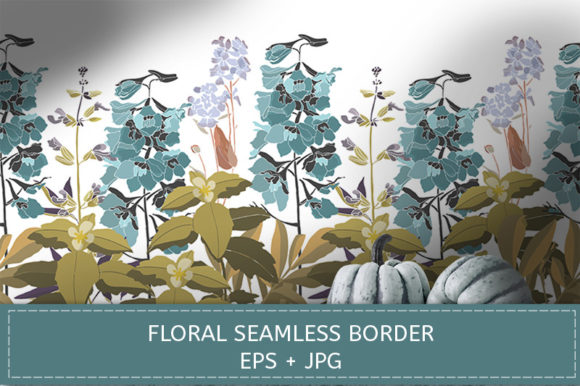
When searching for high-quality, versatile floral patterns, designers often encounter a vast array of options. Among these, the Pattern with Delphinium and Vector floral seamless border presents a specific blend of botanical elegance and technical utility. This pattern, characterized by its blue-green delphinium flowers intertwined with olive branches and leaves, isolated on a white background, is packaged as an EPS 10 vector file and a high-resolution JPG. Understanding its distinct characteristics, compared to other available resources, is crucial for determining its fit for your particular project.
What Distinguishes This Delphinium Pattern
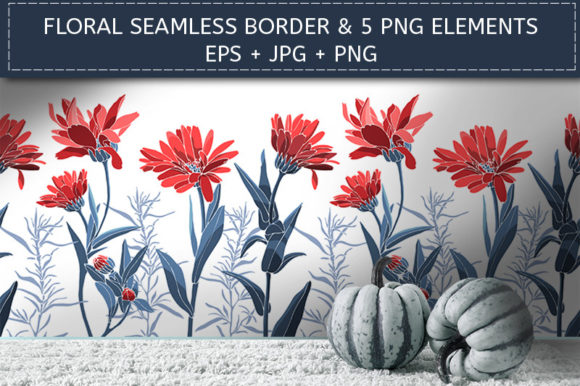
The core of this offering lies in its specific botanical composition and file format suite. Unlike many generic floral patterns that mix numerous species in a dense, colorful arrangement, this pattern focuses on a harmonious blend of two distinct elements: the vertical, cool-toned delphinium and the more subdued, textured olive foliage. This creates a design that is both visually striking and subtly sophisticated, avoiding a overly busy or cluttered feel. The seamless border nature means the pattern can be repeated infinitely along an edge or surface without a visible break, a critical feature for wrapping designs, fabric prints, or website headers.
From a technical standpoint, the included files address two primary workflows. The EPS 10 vector file, compatible with Adobe Illustrator and similar vector software, provides unlimited scalability and easy color editing without loss of quality. This is a significant strength for projects requiring resizing, from a small business card to a large banner. The companion JPG file, at 6000x4000 pixels, offers a ready-to-use, high-detail raster image for applications in Photoshop or other pixel-based environments, suitable for web mock-ups, textured backgrounds, or direct printing at substantial sizes.
Comparing Pattern Formats and Botanical Styles
When evaluating this pattern against the broader market of design resources, several comparison points emerge, primarily around style, format, and intended use.
Floral Style and Atmosphere
The choice between dense, wild meadow patterns and more isolated, compositional designs like this Pattern with Delphinium is a key decision factor. Meadow-style patterns often offer a vibrant, energetic feel with a mix of poppies, daisies, and grasses. They can be excellent for projects aiming for a rustic, summery, or highly textured look. In contrast, the delphinium and olive combination leans towards a refined, garden-inspired aesthetic. Its cooler blue-green palette and structured floral forms evoke a sense of calm, elegance, and perhaps a more formal or heritage-inspired design. This makes it a potential better fit for branding in sectors like wellness, premium goods, or editorial design where a quieter sophistication is desired.
Vector vs. Raster and File Package Tradeoffs
Many design assets are sold as either pure vector sets or as collections of high-resolution photographs or PNGs. The dual-format package here attempts to bridge that gap. A pure vector pack might offer more individual element control—separate delphinium stems and olive leaves that can be rearranged—but may lack a pre-composed, seamless pattern. Conversely, a purchased stock photo of a floral border might offer photographic realism but lacks scalability and easy color manipulation. This Pattern with Delphinium provides a middle path: a pre-made, repeatable composition in both editable vector and ready-use raster forms. The tradeoff is that the design is fixed as a seamless border; you cannot easily extract a single flower for a logo without manual work in Illustrator. Therefore, if your need is specifically for a repeatable border or all-over print, this package is efficient. If you need modular, separate elements, a different vector pack might be more suitable.
Practical Applications and Best-Fit Scenarios
The described uses—decorative design of surfaces, cards, and banners—are broad. Realistic examples help clarify where this pattern excels.
For surface design, such as creating wrapping paper for a boutique brand or textile patterns for home decor, the seamless nature and scalable vector file are major advantages. The white background allows for easy integration onto different materials. For card design, like wedding invitations or corporate greeting cards, the elegant, botanical theme can provide a classic border frame around text. The high-resolution JPG ensures crisp printing. In digital banner design for websites or social media, the JPG can serve as a full-width header background, with the vector file enabling quick adjustments to color tones to match a brand palette.
A less obvious but valuable application is in template creation. Designers building templates for clients in stationary or marketing materials can utilize the vector file to create adaptable frameworks, changing colors seasonally or for different product lines while maintaining a consistent visual identity.
When This Pattern May Not Be the Optimal Choice
Despite its versatility, the Pattern with Delphinium has inherent limitations that signal when an alternative might be necessary.
Firstly, the color palette is specific. Projects demanding warm, bright colors (reds, yellows, oranges) or a monochromatic scheme would require significant color editing in Illustrator, which, while possible, may alter the natural feel of the botanicals. A pattern already created in a warm palette might be a more straightforward choice.
Secondly, the compositional rigidity is a factor. As a pre-made seamless border, it is not a set of loose, overlapping floral elements you can scatter freely across a page. If your design concept requires a more organic, scattered "meadow floor" look where elements break the border structure, this pattern would constrain you. In such cases, a collection of individual floral vector elements or a stock photo of an actual meadow would provide the necessary flexibility.
Finally, the botanical theme itself may not align with all project atmospheres. For designs aiming for a modern minimalist, tech-oriented, or abstract geometric feel, any floral pattern, including this one, would be incongruous. The decision to use florals is a foundational one.
Key Factors for Your Decision
To make an informed choice about using this Pattern with Delphinium, consider these practical questions:
- Project Scale and Output: Will the final design be printed at vastly different sizes? The scalability of the EPS vector file becomes crucial for large-format printing.
- Color Adaptation Needs: Do you foresee needing to change the blue-green tones to match different brand colors? The vector format facilitates this, whereas a raster-only pattern would not.
- Compositional Requirement: Is a clean, repeatable border exactly what your layout calls for, or do you need more freeform placement?
- Workflow and Software: Do you primarily work in Adobe Illustrator (benefiting most from the EPS) or Photoshop (where the JPG is immediately usable)? The dual format covers both, but if you use only one, ensure the main file type matches your tool.
- Atmospheric Alignment: Does the serene, garden-inspired elegance of delphiniums and olive branches support the message and audience of your project?
By weighing these factors against the specific strengths of the Pattern with Delphinium—its elegant botanical blend, seamless repeatability, and dual-format versatility—you can assess whether it is a fitting resource for your current work. It represents a specialized tool within the vast floral design landscape, optimal for projects where its particular aesthetic and technical offerings align with your creative and practical requirements. For other projects, the broader market of design assets will undoubtedly hold more suitable alternatives.